

Sunday Performance vs. Monday Reality: Dealing with Ministry Burnout
- joyfulltherapy
- Jan 4
- 6 min read
For Pastors & Ministry Leaders
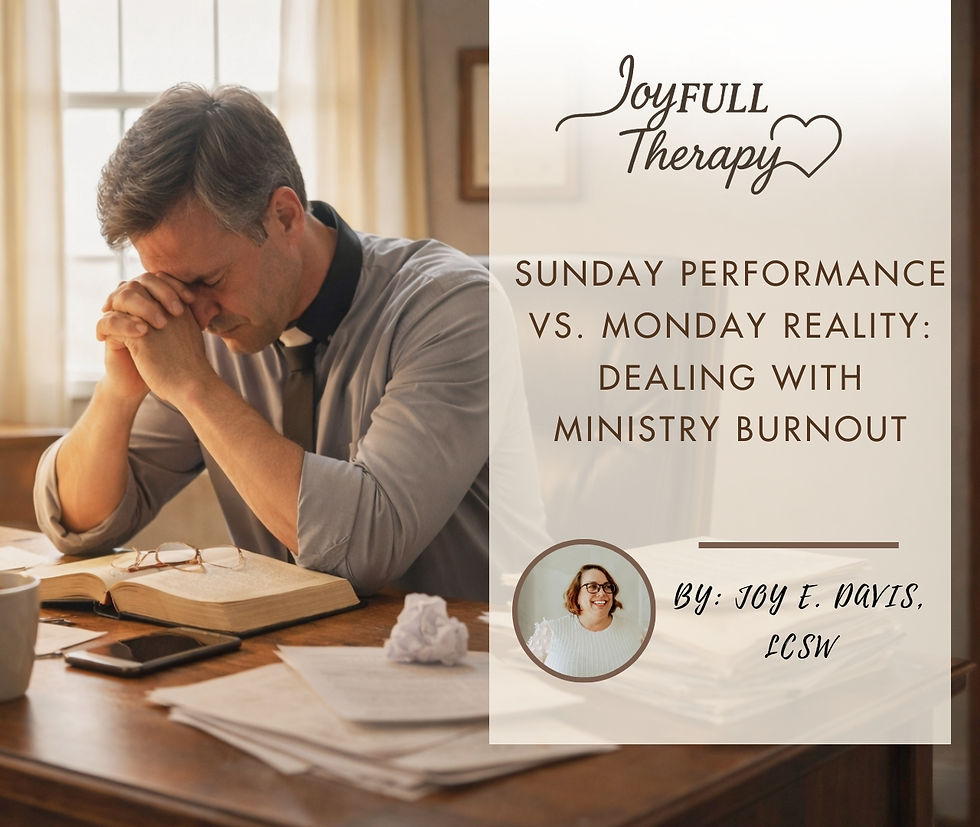
Sunday morning: You step into the pulpit with a smile, deliver an inspiring message about God's faithfulness, shake hands warmly at the door, and offer encouragement to anyone who needs it. You perform your role flawlessly.
Monday morning: You collapse under the weight of fatigue, loneliness, and the growing gap between who you appear to be and who you actually are. The person who encouraged everyone else yesterday can barely encourage themselves today.
If this describes your experience, you're not alone—and you're not failing. You're experiencing ministry burnout, a crisis that affects an alarming number of pastoral leaders.
The Statistics Tell a Sobering Story
Recent research on pastoral health reveals concerning trends:
38% of pastors report being burned out to some degree
71% of pastors report being burned out and having considered leaving ministry in the past year
84% say they're on call 24 hours a day
80% believe pastoral ministry negatively affected their families
70% don't have someone they consider a close friend
These aren't statistics about weakness or spiritual failure. These are indicators of a systemic problem in how we approach ministry leadership and care.
Understanding Ministry Burnout
Ministry burnout differs from regular job stress because it involves:
Identity Fusion: When your sense of self becomes completely intertwined with your ministry role, criticism of your leadership feels like criticism of your worth as a person.
Spiritual Pressure: The expectation that you should have perfect faith means you often can't express doubt, struggle, or spiritual dryness without feeling like you're failing professionally.
Emotional Overextension: Constantly caring for others without adequate care for yourself depletes your emotional reserves.
Performance Expectations: The pressure to always be "on"—inspiring, available, spiritually strong—leaves no space for your own humanity.
Isolation: The nature of leadership can be inherently lonely, and pastoral leadership often intensifies this isolation.
The Sunday/Monday Split
The gap between your Sunday performance and Monday reality creates what psychologists call "emotional dissonance"—the exhausting experience of consistently expressing emotions you don't genuinely feel.
Sunday Performance Demands:
Project confidence and spiritual strength
Offer hope and encouragement to others
Maintain composure during difficult situations
Be available and approachable to everyone
Present solutions and wisdom for complex problems
Monday Reality Might Include:
Feeling spiritually dry or questioning God's presence
Experiencing anxiety, depression, or overwhelming stress
Struggling with your own family relationships
Feeling incompetent or inadequate for ministry demands
Longing for someone to encourage and care for you
When this split becomes too wide, burnout is inevitable.
The Unique Pressures of Year-End Ministry
December can be particularly challenging for ministry leaders:
Increased Expectations: Christmas and New Year services often require extra preparation, special events, and elevated emotional investment.
Family Tension: Your family may need you most during the holidays, but ministry demands often peak at the same time.
Financial Stress: Many churches face year-end financial pressures, and pastors often absorb anxiety about budgets and sustainability.
Personal Reflection: The end of the year naturally prompts evaluation of your ministry effectiveness, often highlighting disappointments and unmet goals.
Seasonal Depression: Shorter days and holiday stress can exacerbate mental health challenges that are harder to address publicly.
Recognizing Burnout Warning Signs
Physical symptoms:
Chronic fatigue that rest doesn't relieve
Frequent illness or weakened immune system
Sleep disturbances or insomnia
Headaches, muscle tension, or digestive issues
Emotional symptoms:
Feeling emotionally numb or detached
Increased irritability or impatience
Anxiety about ministry responsibilities
Depression or hopelessness about your calling
Feeling trapped or resentful about your role
Spiritual symptoms:
Loss of joy in worship or prayer
Going through spiritual motions without engagement
Questioning your faith or calling
Feeling distant from God despite professional religious activity
Relational symptoms:
Withdrawing from family and friends
Difficulty connecting emotionally with congregants
Increased conflict with staff or church leaders
Feeling like no one truly understands your experience
The Theology of Rest for Tired Shepherds
Before addressing practical strategies, it's important to establish a theological foundation for pastoral self-care:
God rested on the seventh day (Genesis 2:2-3)—not because He was tired, but to model the rhythm of work and rest that creation needs.
Jesus regularly withdrew from crowds (Luke 5:16) to pray and rest, even when people were still seeking Him for help.
Elijah received food and sleep (1 Kings 19:5-8) before receiving spiritual guidance—God cared for his physical needs first.
The disciples were instructed to rest (Mark 6:31) when they returned from intensive ministry.
Rest isn't selfish—it's obedience. Self-care isn't optional—it's stewardship of the calling God has given you.
Strategies for Addressing Ministry Burnout
1. Honest Assessment
As this year ends, ask yourself these difficult questions:
Where have I overextended beyond my actual capacity?
What ministry activities drain me without producing significant fruit?
How has the gap between my public role and private reality affected my wellbeing?
What expectations (from others or myself) are unsustainable?
Where do I need renewal—physically, emotionally, relationally, spiritually?
2. Strategic Subtraction
Recovery from burnout often requires removing things, not just adding self-care activities:
Consider eliminating:
Committees or responsibilities that don't align with your core calling
Social obligations that feel draining rather than life-giving
Perfectionist standards that create unnecessary pressure
Availability expectations that prevent genuine rest
3. Professional Boundaries
Establish clear boundaries around your time and availability:
Set specific office hours and communicate them clearly
Create emergency protocols so you're not called for every small crisis
Take your full day off each week without guilt
Use your vacation time fully and disconnect from work communications
Delegate responsibilities that others can handle
4. Personal Renewal
Physical renewal:
Prioritize sleep as spiritual discipline, not luxury
Exercise regularly, even if just daily walks
Eat well and stay hydrated
Address any medical concerns you've been ignoring
Emotional renewal:
Seek counseling or spiritual direction
Cultivate friendships outside your congregation
Engage in hobbies that bring you joy
Allow yourself to feel and express difficult emotions
Spiritual renewal:
Spend time with God that's not preparation for ministry
Attend worship where you're not responsible for leading
Read Scripture for your own soul, not sermon preparation
Practice forms of prayer that restore rather than perform
Creating Support Systems
Professional Support:
Regular counseling or coaching
Mentor relationships with experienced pastors
Peer groups with other ministry leaders
Denominational resources and support systems
Personal Support:
Friends who knew you before you were a pastor
Family relationships that aren't centered on your ministry role
Community connections outside church contexts
Professional relationships (doctor, accountant, etc.) who see you as a person
Planning for a Healthier Ministry Year
As you prepare for the new year, consider these questions:
Capacity Planning:
What is my actual capacity for ministry responsibilities?
How can I better align my commitments with my realistic abilities?
What support systems do I need to strengthen?
Role Clarification:
What are the essential functions only I can fulfill?
What responsibilities can be delegated or shared?
How can I help my congregation understand realistic expectations for pastoral leadership?
Personal Growth:
What areas of personal health (physical, emotional, spiritual) need attention?
What professional development would help me serve more effectively?
How can I better integrate my personal spiritual life with my ministry calling?
When to Seek Professional Help
Consider professional counseling if:
You're experiencing symptoms of depression or anxiety
Your marriage or family relationships are suffering significantly
You're having thoughts of leaving ministry without clear alternative direction
You're struggling with substance use as a coping mechanism
You're experiencing panic attacks or other acute stress symptoms
A Word to Church Leaders
If you're a board member, staff colleague, or church leader reading this, consider how you can support your pastor's wellbeing:
Encourage and financially support counseling/coaching for pastoral staff
Provide adequate vacation time and sabbatical opportunities
Create realistic job descriptions and performance expectations
Foster a church culture that sees pastoral humanity as strength, not weakness
Offer practical support during high-stress seasons
Hope for the New Year
Ministry burnout doesn't mean you're called to leave ministry—it means you're called to approach ministry differently. Many effective, joyful pastors have walked through seasons of burnout and emerged with healthier perspectives on calling, boundaries, and sustainable service.
The same God who called you into ministry cares about your wellbeing. The same Jesus who gave His life for the sheep also calls you to receive care, not just give it.
As you step into a new year, remember: You are loved first, called second. Your worth comes from being God's beloved child, not from your ministry performance. And the church needs you healthy and whole more than it needs you exhausted and empty.
Ready to address ministry burnout and step into the New Year with renewed purpose and sustainable practices? Pastoral counseling provides the professional support you need to process burnout, establish healthy boundaries, and rediscover joy in your calling.
Schedule your FREE 30-minute consultation: https://calendly.com/joyfulltherapy/30min


Comments